About Me and How I Work
My work as a therapist is rooted in deep respect for the innate drive toward connection and transformation that lives within all of us. I am continually inspired by the courage it takes to look inward, to face difficult emotions, and to practice being present with the unknown.
The process of coming into a conscious relationship with our experience, and all that it contains, is unique and personal for each person. But for many it requires holding space for the unknown, turning towards one’s experience with compassion, and becoming curious about one’s inner world. I feel honored to accompany people as they do this work.
I am a Licensed Clinical Social Worker with advanced training in perinatal mental health, trauma, and mindfulness. I also hold an MDiv in Buddhist Studies and have worked as an interfaith hospital chaplain. That experience, along with a lifelong interest in spirituality and religion and my own study and practice of Buddhism, shapes how I sit with people through the most vulnerable parts of life.
My Approach
Many of us learn to cope with hard experiences by becoming capable, independent, or focused on taking care of others. Those strengths can help us get through, and they can also leave us feeling cut off from ourselves or unsure of what we need.
Therapy is a place to slow down and approach your experience with compassion and curiosity. We will work together to create space for your emotions and allow them to guide you. My role isn’t to tell you who you should become. It’s to work alongside you as you discover what’s already within you: your strengths, your values, your emotions, and your capacity to grow.
Psychodynamic Psychotherapy: noticing how past experiences and relationships shape the way you feel and cope today.
AEDP: working with emotions as they arise in the moment in the safety of an attuned relationship.
Existential Psychotherapy: making room for the big questions of meaning, loss, uncertainty, and choice without prescribing the answer.
Attachment and Neurobiology: understanding how early relationships and the nervous system shape how we connect with others and how safe we feel in the world.
Somatic and experiential approaches: emotions live in the body, and paying attention to that connection can build awareness, compassion, and a sense of safety.
Parts work-informed approaches: many of us have parts with conflicting needs, fears, or protective roles. Getting curious about them tends to bring more self-understanding and compassion.
Professional Background
Licensure
Licensed Clinical Social Worker in Oregon (L16402), Illinois (149023759), & Tennessee (9481)
Education
University of Chicago — AM, Clinical Social Work
University of Chicago — MDiv, Buddhist Philosophy
Harvard University — BA, Comparative Study of Religion and Psychology
Clinical Training
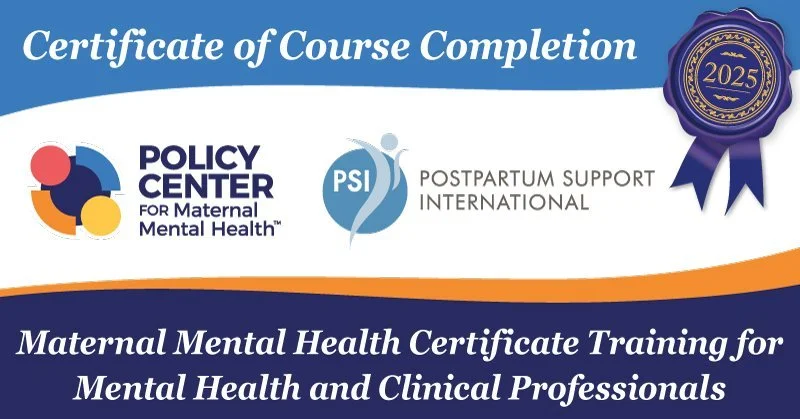
Postpartum Support International: Certificate in Maternal Mental Health and Advanced Perinatal Mental Health Psychotherapy Training
Fellow, Chicago Center for Psychoanalysis
Clinical Pastoral Education Residency, Northwestern Medicine
Trauma-Informed Practice Certificate, University of Chicago